Latest news
Read the latest news from the Centre for Sustainable Materials Research and Technology


UNSW SMaRT Centre's Green Ceramics MICROfactorieTM Technology will be a key feature at the Liverpool City Council 2026 Circular Economy Open Day on Saturday 14 November.
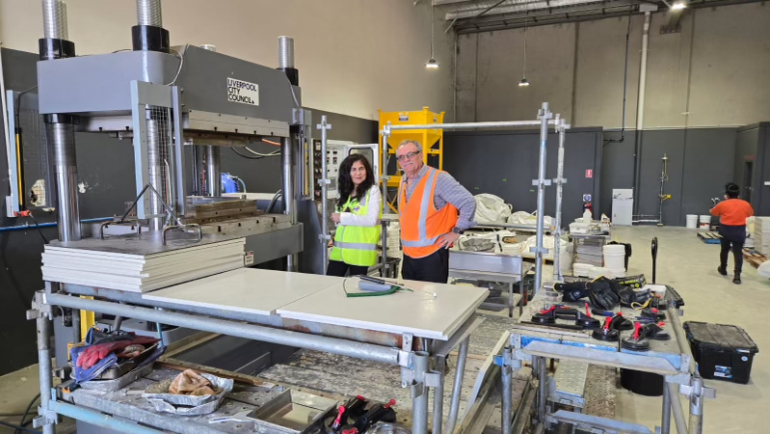
In partnership with SMaRT, Liverpool City Council operates a Green Ceramics MICROfactorieTM using SMaRT's technology that produces a range of engineered ceramic tiles made from glass and textiles wastes.
Liverpool Council open day announcement and to register
National Recycling Week OPEN DAY at Liverpool Councils and Circular Economy Centre
Get ready for a day of discovery, big trucks and fun learning! Join Liverpool City Council, the Sustainable Communities and Waste Hub (SCaW Hub), UNSW SMaRT Centre and Planet Ark at the Circular Economy Centre OPEN DAY on Saturday 14 November.
Explore behind the scenes with facility tours, watch rubbish truck demonstrations, enjoy interactive presentations and information stalls, grab a bite from local food trucks, and take part in activities for all ages. Plus, enjoy a free charcoal barbecue, proudly supported by the SCaW Hub.
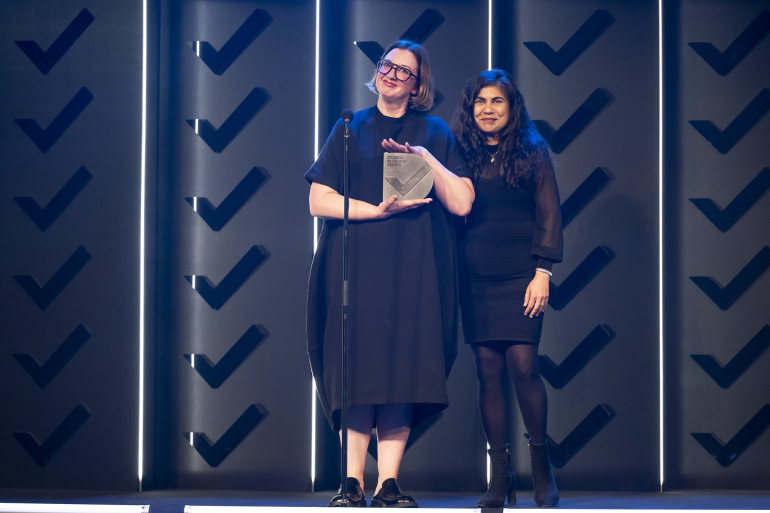
This follows SMaRT recently winning an award in collaboration with its commercial partner, Liverpool City Council, which operates a Green Ceramics MICROfactorieTM that produces a range of engineered ceramic tiles made from glass and textiles wastes.
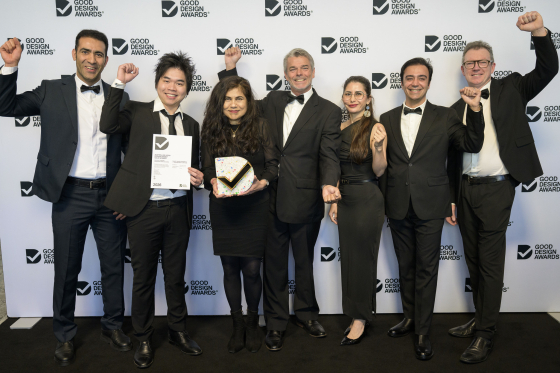
SMaRT won the Gold Winner Award in the Product Design Hardware and Building category, and the technology also won a Best in Class Award.
Liverpool City Council said: "Through partnership with Prof. Sahajwalla and the UNSW SMaRT Centre, Liverpool has transformed a costly waste problem into a circular economy success story.
"Discarded mattresses that once went to landfill are now being shredded and re-manufactured into durable, low-carbon green ceramic tiles made from waste textiles and glass.
"These tiles are supporting local manufacturing, reducing waste management costs, and showing how innovation can turn waste into a valuable resource."
Veena said: “True sustainability demands we harness this potential and transform waste into a resource stream for advanced manufacturing.
"A few years back, Liverpool council hired Tim Pasley to head up their circular economy department.
"Tim was going through the council’s budget and was shocked to learn that Liverpool was spending a lot every year to get rid of discarded mattresses.
"Residents in the council area discard thousands, tens of thousands of mattresses every year. Liverpool is not unique in that, I must stress.
"Every council spends vast sums on dealing with waste, and mattresses are a big issue.
"We worked with Liverpool council to build one of these microfactories, which is now successfully producing green ceramics using a portion of the LGA’s waste resources.
"It’s not energy intensive, it didn’t require huge capital outlays, and it helps the council save on one of its biggest budget line-items.
"Liverpool Council wants to commercialise this process, to sell the products to other councils and the public, earn a profit on behalf of ratepayers, as well as deal with more and more of their waste."
The Liverpool example is just one from a number of waste to product, remanufcturing technologies Veena spoke of recently in an address to the National Press Club of Australia.
Good Design Awards background:
Entry SMaRT Green Ceramics — Engineered Surfaces Category Product Design Hardware and Building Accolade 2026 Australian Good Design Award Gold Winner, and Best in Class Winner |
The Awards Jury said: “The Jury recognises SMaRT Green Ceramics as an impactful and innovative solution that transforms problematic waste streams into high-performance architectural surfaces. The team is commended for achieving impressive physical performance standards including 26.2 MPa wet flexural strength and perfect stain resistance while manufacturing at just 130°C in under six minutes, a fraction of the energy required for conventional ceramic production.
"The Jury was impressed by the quality and aesthetic appeal of these products given their material origins, noting the range appears versatile and suitable across various applications and settings. The sustainability impact is significant, having diverted over 500 tonnes of glass and 18 tonnes of textile waste from landfill annually, while delivering an estimated 46% lower embodied carbon compared to conventional tiles. Well done.”
Inf announcing the subsequent Best in Class award, Good Design Australia said: "The Best in Class accolade recognises the leading projects in each sub-category - those selected by the Jury as exceptional examples of design excellence, innovation and impact.
"Rising to the top of an outstanding field, these projects represent the very best of the best. Each sets a benchmark for its sector and demonstrates what is possible when creativity, purpose and design leadership come together.
"Congratulations to the designers, teams and organisations behind this year’s remarkable Best in Class recipients."
Waste has a role in a circular economy
SMaRT Director, Prof Veena Sahajwalla, said the award was a fitting recognition not just of the ongoing research and development work by the SMaRT team in relation to the Green Ceramics technology, but for the collaboration with Liverpool City Council which commissioned the technology.
“Recovering materials from waste has a big role to play as we move towards a sustainable future and a circular economy, reducing our carbon footprint.
“Many of the materials needed for our future needs are finite in supply, so using innovative technologies to reform waste into value-added feedstock for remanufacturing means we can also accelerate our sovereign manufacturing capability.
"Waste itself can, and must, be seen as a resource with economic and social benefits as we strive to be more sustainable, and that is why we continue our efforts to develop a range of MICROfactorieTM Technologies that reform hard to recycle wastes into products and feedstock for remanufacturing."
Media story - The Australia Today


Good Design Australia said: "his year’s Awards are presented under the theme Design that Leads - celebrating the critical role of design in navigating complexity, driving innovation and creating positive change.
"At a time of unprecedented social, environmental and technological change, this year’s theme recognises that good design is more than an outcome, it is a powerful way of thinking, imagining and acting. It challenges us to question what is, envision what could be and design better products, services, places and systems for people and planet."
The 2026 Australian Good Design Awards Ceremony will take place on Friday 9 October at the International Convention Centre (ICC) Sydney, bringing together more than 1,000 guests from across design, architecture, engineering, business, government and the wider creative industries.
The Ceremony will celebrate the very best in contemporary design and reveal the recipients of the Good Design Award Best in Discipline, Special Accolades, the Good Design Award for Sustainability, and the Australian Good Design Award of the Year – the nation’s highest design honour.
Good Design Australia Managing Director Rachel Wye said the range of projects recognised in 2026 reflected the role design now plays across the economy and community.
“Design is an important economic and social capability. It influences the products we create, the services we rely on, the policies we develop and the way organisations respond to complex problems,” Ms Wye said.
“This year’s Award winners are addressing energy costs, healthcare, environmental degradation, artificial intelligence, disaster preparedness, accessibility and community wellbeing.
“Australia has an extraordinary design community and an opportunity to use that capability to strengthen our economy, improve lives and build industries that can compete internationally.”
Setting the Global Benchmark for Design Excellence
The Australian Good Design Awards recognise excellence from around the world across 13 overarching design disciplines and more than 30 categories, encompassing Built Environment, Communication Design, Concept Design, Digital Design, Design Research, Design Strategy, Engineering Design, Fashion and Textiles, Next Gen, Policy Design, Product Design, Service Design and Social Impact.
Every project is evaluated by an independent Jury of more than 100 Australian and international design experts against three core criteria: Good Design, Design Innovation and Design Impact.
Established in 1958, the Australian Good Design Awards are Australia’s longest-running international design awards and one of the world’s most respected design recognition programs.
Below: Veena, a former GDA Woman of the Year Award recipient, presents the 2026 Award.