Latest news
Read the latest news from the Centre for Sustainable Materials Research and Technology


The UNSW SMaRT Centre has been named a 2026 Eureka Prize for Sustainability Research finalist
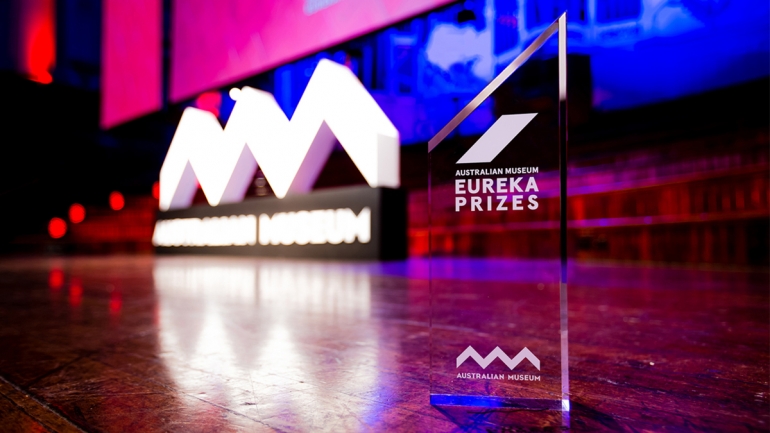
The UNSW SMaRT Centre has been named a 2026 Eureka Prize for Sustainability Research finalist.
The Australian Museum Eureka Prizes are the country’s most comprehensive national science awards, honouring excellence across the areas of research & innovation, leadership, science engagement, and school science.
Presented annually in partnership with some of the nation's leading scientific institutions, government organisations, universities and corporations, the Eureka Prizes raise the profile of science and science engagement in the community by celebrating outstanding achievement.
The 2026 winners will be announced on Thursday 3 September, at an awards ceremony at Sydney Town Hall.
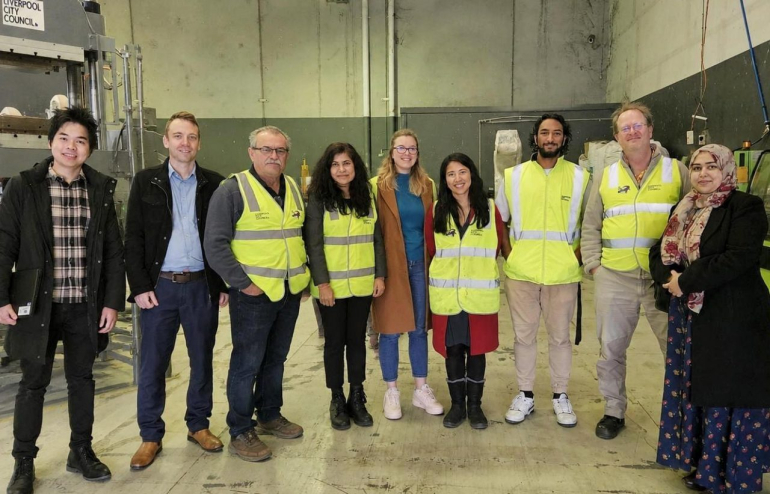
Some of the SMaRT team members and Liverpool City Council staff at a council MICROfactorieTM site in Liverpool: From Left: Dr Heriyanto, Tim Pasley, Nik Nikolovski, Scientia Professor Veena Sahajwalla, Maurane Vanderzwalm, Archana Maharjan, Ismail Asad, Karl Adderley and Dr Rumana Hossain.
SMaRT is a finalist for the Sustainability Research Award for its extensive body of research and development across various related multidisciplinary programs, as the pioneer of the science of microrecycling, a novel approach that reforms complex waste streams into value-added materials and products.
Underpinned by this science, SMaRT@UNSW introduced MICROfactorie™ Technologies—modular, decentralised systems designed to convert problematic waste streams (e-waste, glass, textiles, plastics, and metals) into engineered materials and products. Initial non-commercial E-waste, Green Ceramics and Plastics MICROfactories™ demonstrated the feasibility of decentralised recycling and manufacturing.
SMaRT Director, Prof Veena Sahajwalla, said: "This work responds to a growing materials paradox: the technologies driving decarbonisation and digitisation - such as electric vehicles, solar energy and electronics - depend on finite critical elements embedded in complex products that conventional recycling systems cannot efficiently recover.
"The result is increasing waste accumulation and supply-chain vulnerability for critical materials such as lithium, cobalt, nickel, rare earth elements, and high-purity carbons. Microrecycling provides a scalable solution by enabling recovery and remanufacturing at the point of waste generation."
“At SMaRT@UNSW, we believe waste is one of our greatest untapped resources. By working with communities, industry, government and research partners, we're translating innovative science into practical solutions that support a more circular economy and create meaningful environmental, social and economic impact,” Prof. Sahajwalla said.
“I’m delighted to see this important work recognised. Creating a more sustainable future depends on rethinking waste as a valuable resource and unlocking its potential to become the next generation of sustainable materials and products.”
Read the Australian Museum announcement
Watch these short videos of Veena explaining work at the UNSW SMaRT Centre: