
Latest news
Read the latest news from the Centre for Sustainable Materials Research and Technology


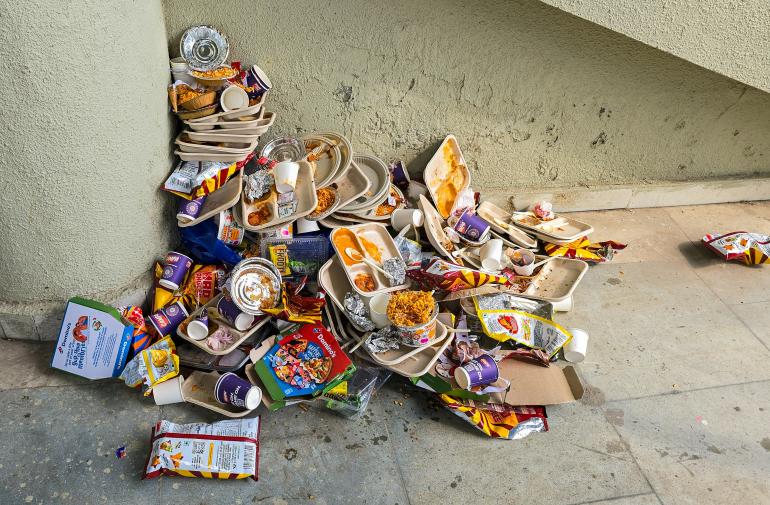
The UNSW SMaRT Centre has made a detailed submission to the Australian Parliament's Environment and Communications Legislation Committee Inquiry into the Extended Producer Responsibility Scheme for Packaging (No Time to Waste) Bill 2026.
On 14 May 2026 the Senate referred the Extended Producer Responsibility Scheme for Packaging (No Time to Waste) Bill 2026 to the Committee to do an inquiry and report.
SMaRT's submission extracts recent key findings from a number of research studies undertaken with funding from the Australian Government under the National Environmental Science Program's Sustainable Communities and Waste Hub, headed by SMaRT and its Director, Prof Veena Sahajwalla.
Excerpt from the SMaRT submission:
Primary response
The creation of a uniform national packaging EPR framework that would place a direct obligation on producers, importers and distributors to manage the packaging they place on the Australian market throughout its lifecycle, is the logical next step in Australia to help meet waste reduction targets which are simply not being advanced through voluntary means, according to the National Waste and Resource Recovery Reporting from DCCEEW as this Committee has previously noted.
This Bill would also help shift the pressure and cost-base of reform from councils – which have the responsibility for waste collection and recycling – to producers who benefit economically from their product sales yet bare no costs in relation to the waste and for the many significant negative environmental and health impacts from their end of life products.
Incentives to ensure producers better design products for end of life are therefore not just welcome, but necessary, as are minimum recycled-content requirements.
The Bill is also moving in the direction that Europe has been adopting to encourage greater sustainability in relation to waste, recycling and product packaging impacts. The Packaging and Packaging Waste Regulation establishes direct EU-wide laws, and producers there are now required to cover the full operational and financial costs of managing packaging waste.
This European wide Regulation, driven by the EU Waste Framework Directive, enforces mandatory eco-design standards, bans certain single-use packaging formats, and requires businesses to register with local compliance schemes before selling their products.
We find it hard to argue against the Bill’s objectives:
“The objectives of the extended producer responsibility scheme for packaging are the following: (a) to ensure responsible persons of packaging have responsibility for the management of their packaging over the entire life cycle of their packaging; (b) to ensure reductions in the use of packaging and virgin plastics; (c) to ensure materials and additives that impede recycling are, where appropriate, prohibited in, or phased out of, the manufacture of packaging; (d) to ensure packaging is manufactured in accordance with best-practice standards relating to the eco-design of the packaging; (e) to increase resource recovery and recycling rates and support the growth of the domestic Australian recycling industry, including by ensuring the following minimum targets in relation to packaging made, used or sold in Australia are met by 2030: (i) all packaging (whether or not plastic) must be reusable, recyclable or compostable; (ii) 70% of all plastic packaging must be recycled or composted; (iii) all packaging (whether or not plastic) must include at least 50% recycled content, including at least 30% Australian recycled content; (iv) all problematic and unnecessary single-use plastic packaging must be phased out; (f) to ensure the labelling of packaged products include clear and accurate information about the environmental impacts and correct disposal of the packaging of the products; (g) to provide financial incentives for responsible persons of packaging to reduce packaging, and improve the eco-design, of their packaging, such as by requiring the responsible persons to pay eco-modulated fees calculated on the basis of the recyclability or manufactured quantity of their packaging; (h) to support ongoing consumer education and awareness of matters related to the scheme.”
Below are some research findings from some recently published scientific investigations by the UNSW SMaRT Centre that support our primary response:
Below we include a Plastics MICROfactorieTM Case Study to demonstrate just one waste to feedstock/product technology, and further below we provide a summary of some of our relevant research findings to demonstrate that Australia is well positioned to start including recycled content as feedstock for remanufacturing as a primary way to meet national, state and local government waste reduction and resource recovery targets, which so far are proving elusive.