
Latest news
Read the latest news from the Centre for Sustainable Materials Research and Technology


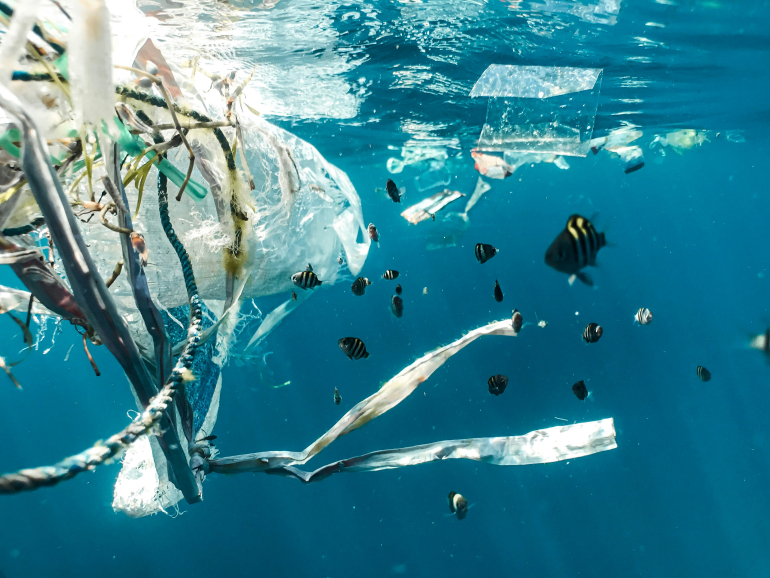
The UNSW SMaRT Centre has made a detailed submission as part of the consultation process for the Australian Senate Community Affairs References Committee's "Inquiry into the Impact of Microplastics and other Toxics on Human Health".
The Inquiry terms of reference focus on looking into the impact of microplastics, toxics and forever chemicals on human health; the effectiveness of any education or informative efforts to notify the public of potential harms and prevention opportunities; the potential benefits of a national standard for consumer products; protocols and policies of other countries which have proven to be effective; and the adequacy of current research, monitoring and measurement standards for microplastic contamination in Australia.
SMaRT's submission extracts recent key findings from a number of research studies undertaken with funding from the Australian Government under the National Environmental Science Program's Sustainable Communities and Waste Hub, headed by SMaRT and its Director, Prof Veena Sahajwalla.
Core response
We believe our environmental and generic health impacts research findings will be beneficial to the committee in terms of understanding key practices that cause microplastics to be released and imbibed by humans.
In 2025, UNSW SMaRT Centre researchers had published a study[i] revealing the impacts of microplastics generated from polypropylene (PP) bottles commonly used for infants and re-usable drinking.
The study published in the prestige Elsevier journal Environmental Nanotechnology, Monitoring & Management investigated microplastic effects of PP, widely used for food and beverage storage.
PP has a propensity to release microplastics (MPs) and nanoplastics (NPs) under routine use conditions, and the SMaRT team investigated impacts of PP infant feeding bottles and water bottles under controlled thermal and mechanical stresses.
Supported with funding from the Australian Government under the National Environmental Science Program's Sustainable Communities and Waste Hub, headed by SMaRT and Prof Veena, the study found:
UNSW SMaRT Centre researchers in 2024 and 2025 also took part in a collaborative research project on microplastics, with the publication of a paper entitled 'A field and laboratory manual for sampling, processing and reporting microplastics in coastal and marine environments pollution in Australia[ii]'. Published by Frontiers in Marine Science, the paper presents a comprehensive guideline of harmonised and standardised field and laboratory approaches for microplastics.
The paper found that while global interest in microplastics is increasing, with numerous organisations collecting data on microplastics in the environment, disparate sampling, analysis, and reporting methods limit our ability to integrate data, hindering a global understanding of microplastic occurrence, effects and dynamics.
Drawing on international directives and collaborations, the paper presents a comprehensive guideline of harmonised and standardised field and laboratory approaches for microplastics in marine and coastal environments.
The study aims to ensure data consistency and comparability, incorporating the latest methodological developments for investigating and monitoring microplastics in four environmental matrices: sediment, water, biota, and air. A participatory approach brought together 40 researchers with diverse experience, reflecting a broad range of regional and international research.
It provides best practice recommendations for sample processing to isolate, quantify and characterise microplastics, along with effective quality assurance and quality control measures. It also includes reporting and data release recommendations, to ensure consistency and comparability across datasets. The guideline is endorsed by Ocean Best Practices System. By following these guidelines, and incorporating workflows supporting Findable, Accessible, Interoperable, and Reusable (FAIR) data, diverse stakeholders and practitioners can generate harmonised data essential for decision-making, facilitating a collective ability to synthesise global datasets and support action on microplastics, including for policy and regulatory decision making.
The study team concluded the development and dissemination of the manual represented a critical step toward harmonising microplastic research in Australia and globally. See supplementary materials, Supplementary Table S2 to ensure consistent data generation. By working together to align methods and reporting standards, the scientific community can generate high-quality, interoperable data that supports meaningful comparisons, long-term monitoring, and informed management decisions.
This work was supported by the Marine and Coastal Hub, a collaborative partnership supported through funding from the Australian Government’s National Environmental Science Program, and the UNSW SMaRT Centre researchers who were participating via the Program's Sustainable Communities and Waste Hub.
In another, third recent study by SMaRT researchers via its Sustainable Communities and Waste Hub, entitled “Microplastics pollution in Australia: Sources, impacts, and mitigation strategies[iii]” published in the Elsevier/Science Direct journal Case Studies in Chemical and Environmental Engineering, revealed the shocking extent of microplastics pollution in Australia.
It contains a detailed review of the existing Australian research about microplastics in sediments, indoor air, road dust, fresh water, marine water, and living organisms, and found:
The study provides a broad and detailed overview of the issue of microplastic pollution in Australia, examining the sources, distribution, entry pathways, and fates of microplastics, as well as their effects on living organisms (including humans) and the environment. Additionally, it explores various strategies and policies adopted by other nations to mitigate microplastic pollution.
It found microplastics pose significant threats to human health, biodiversity, and ecosystems. While several initiatives have been introduced across Australia to address plastic waste -such as the banning of plastic bags by Coles and Woolworths, restrictions on single-use plastics, the Victorian container deposit scheme, and the longstanding South Australian container deposit scheme - specific legislation targeting microplastics remains absent on a national scale.
More comprehensive studies, particularly quantitative research, are needed to better understand the extent of microplastic generation from various sources, their impacts on Australia's environment and human health, and to develop tailored solutions. Such efforts should address aquatic pollution, which significantly affects cities near oceans and other water bodies.
SMaRT’s most recent microplastic study, “A comprehensive toolkit for micro- to nanoplastic analysis[iv]”, published December 2025 by the Royal Society of Chemistry, found that the focus should now be more on nanoplastics, which are much smaller than and non-visible like microplastics.
This study advanced this field by consolidating and critically assessing a micro-to-nano toolkit that integrates mass-based, particle-based, and imaging methods, highlighting their respective strengths, limitations, and complementarities. By identifying key methodological gaps - such as the lack of reference materials, harmonized protocols, and validated nanoscale techniques – the research provides a roadmap for generating reliable, comparable, and environmentally realistic MNP data.
These advances are crucial for understanding the environmental fate, transport, and impacts of MNPs, thereby informing risk assessment, policy, and mitigation strategies. Looking ahead, the next breakthrough in micro- and nanoplastic (MNP) research will not come from incremental improvements in detection limits alone but from a paradigm shift toward integrative, automated, and predictive analysis.
Analytical chemistry, materials science, data science, and environmental modelling must converge to build an end-to-end analytical ecosystem—one that links sampling, pretreatment, detection, and interpretation within a single, interoperable framework. Artificial intelligence and machine learning will play a central role by enabling automated spectral classification, pattern recognition of polymer mixtures, and data-driven correction of measurement biases. Future progress will also hinge on sensor miniaturisation and field deployability, allowing real-time MNP monitoring through portable spectroscopic or electrochemical devices. These tools could eventually support continuous surveillance in drinking water, wastewater, and atmospheric monitoring networks.
Another transformative direction lies in coupling analytical precision with environmental relevance. This means moving beyond particle counts to define exposure thresholds and toxicity-relevant metrics that can inform risk-based regulation. Integrating MNP analytics with omics-based biological assays and computational toxicology models will enable predictive understanding of how particle properties—size, surface chemistry, and aging state—govern bioavailability and effects. Equally, cross-disciplinary efforts should aim to design benign-by-design polymers whose environmental signatures can be rapidly identified by standardised analytical fingerprints, reducing future uncertainty.
Ultimately, the breakthrough insight for the field is to treat MNP analysis not merely as measurement science but as a dynamic, systems-level discipline that unites advanced instrumentation, data integration, and policy translation. Achieving this synthesis will transform MNP detection from an analytical challenge into a cornerstone of sustainable materials management and environmental protection.
Plastics pollution data
Data from the Australian Plastic Flows and Fates Study National Report published by the Department of Climate Change, Energy, the Environment, and Water (DCCEEW)[v], and via many other DCCEEW and Government sources, show ever increasing amounts of plastic and other wastes, leading to a growing flow of microplastics.
Data from the plastic flows report show:
Standards, protocols and policies
Recent public discussion around microplastics in the human body has highlighted both the urgency of plastic pollution and the complexity of accurately measuring its impacts on human health. Claims that microplastics are widely distributed throughout human organs have generated significant concern, but they have also prompted important scientific reflection on how such conclusions are reached.
There is little doubt that humans are routinely exposed to microplastics through food, water, and air. Plastic particles are now ubiquitous in the environment, and human contact with them is unavoidable. However, exposure alone does not equate to confirmed biological accumulation or demonstrated harm. The challenge lies in distinguishing what can be reliably detected from what can be confidently interpreted.
A key issue is the analytical difficulty of identifying microplastics within complex biological tissues. Many commonly used methods can generate signals that resemble plastic polymers even when none are present, particularly if contamination controls and validation steps are insufficient. Without rigorous standardisation, there is a real risk that background noise, laboratory contamination, or misassigned chemical signatures may be mistaken for evidence of widespread internal accumulation.
Equally important is the distinction between detection and health impact. While laboratory and model studies suggest that micro- and nanoplastics can interact with biological systems, translating these findings into meaningful conclusions about human health requires careful consideration of dose, particle size, exposure duration, and biological context. At present, definitive causal links between microplastics and specific human diseases remain difficult to establish.
This does not diminish the seriousness of plastic pollution or the need for continued investigation. Rather, it underscores the importance of methodological rigour, transparency, and restraint in how findings are communicated. Overstated claims risk undermining public trust and diverting attention from the substantial environmental and waste-management challenges that are already well established.
Moving forward, the focus should be on improving analytical standards, developing reproducible measurement frameworks, and building a robust evidence base that can genuinely inform health policy and environmental action. A balanced, scientifically grounded approach will ensure that concern about microplastics drives meaningful solutions rather than unnecessary alarm.
While Australia’s research capacity on microplastics has grown substantially in recent years, fragmentation in monitoring methodologies has limited national comparability, long-term trend analysis, and regulatory application.
A major step forward has been the release of AS ISO 24187: Principles for the analysis of microplastics present in the environment[vi], developed under the leadership of Standards Australia. This standard establishes consistent principles for sampling, sample preparation, identification, quantification and reporting of microplastics in air, water and soil.
The UNSW SMaRT Centre played a key role in shaping this framework through the contribution of Dr Rumana Hossain to the ME-009 Microplastics Committee. The Standard addresses long-standing inconsistencies in analytical methods that previously hindered cross-study comparisons and policy translation.
However, further work is required to:
While Australia now has a strong analytical foundation, regulatory robustness, implementation, harmonisation and longitudinal funding remain insufficient.
Based on and as published in our above-mentioned research papers, the Australian government could consider implementing the following legislative measures and policies to reduce microplastic pollution:
Innovative practices and technologies - like enhanced plastics collection and innovative recycling like SMaRT's own Plastics MICROfactorie Technology[vii] - are needed to help reduce the terrible impacts of plastics waste.
Potential benefits of a national standard for consumer products
A national product standard targeting microplastic shedding, additives and durability would deliver significant benefits:
Australia’s leadership in AS ISO 24187 demonstrates that we have the technical capability to extend standardisation upstream into product design. A national product standard could complement environmental measurement standards, forming a coherent regulatory architecture from production to post-consumer management.
Protocols and policies of other countries
Several international approaches provide instructive models:
Key lessons include:
Australia is well positioned to integrate such lessons with its new analytical standard and its advanced materials innovation ecosystem.
Effectiveness of Education and Informative Efforts
Public awareness of plastic pollution is high; however, understanding of microplastics — their sources, pathways and prevention opportunities — remains limited and often fragmented.
Current education efforts tend to focus on:
Less emphasis has been placed on:
The UNSW SMaRT Centre has contributed to bridging this gap by translating laboratory research into public-facing innovation pathways, including advocacy around its MICROfactorie™ Technologies and Green Steel™ Polymer Injection Technology[viii] (which uses waste plastics/polymers as replace for coke and coal in steel making), demonstrating how advanced microrecycling can reduce leakage into the environment, thus reducing the known and emerging harmful impacts of microplastics to human and all animal and plant life.
There remains an opportunity to:
Education must shift from awareness to systems-level prevention and regulation to ensure change takes place.
Other related matters
Circular economy integration
Microplastic mitigation must be integrated into broader circular economy strategies. Research from the UNSW SMaRT Centre demonstrates that advanced microrecycling technologies can convert problematic waste streams into higher-value materials, reducing both macro- and microplastic leakage.
A national microplastics strategy should:
Data-to-policy translation
The development of AS ISO 24187 illustrates the importance of translating science into enforceable standards. Continued federal support is required to:
Health research integration
While ecological impacts are increasingly documented, human health impacts remain an emerging field. Coordinated investment in toxicology, exposure pathways and biomonitoring is required to complement environmental measurement standards.
Conclusion
Australia has taken a globally significant step through the development of AS ISO 24187, with input from the UNSW SMaRT Centre through Standards Australia leadership.
However, measurement alone is insufficient. A comprehensive national response must integrate:
With coordinated implementation, Australia can move from fragmented monitoring to systemic prevention — positioning itself as a global leader in science-based microplastics mitigation.
#
[i] Understanding the multiple characteristics of microplastics generated from polypropylene bottles: https://www.sciencedirect.com/science/article/pii/S2215153225000649
[ii] A field and laboratory manual for sampling, processing and reporting microplastics in coastal and marine environments pollution in Australia: https://www.frontiersin.org/journals/marine-science/articles/10.3389/fmars.2025.1674412/full
[iii] Microplastics pollution in Australia: Sources, impacts, and mitigation strategies: https://www.sciencedirect.com/science/article/pii/S2666016424004304?via%3Dihub
[iv] A comprehensive toolkit for micro- to nanoplastic analysis: https://pubs.rsc.org/en/content/articlehtml/2026/en/d5en00856e
[v] Australian Plastic Flows and Fates Study National Report published by the Department of Climate Change, Energy, the Environment, and Water (DCCEEW): https://www.dcceew.gov.au/environment/protection/waste/publications/australian-plastic-flows-and-fates-national-report-2021-22
[vi] AS ISO 24187: Principles for the analysis of microplastics present in the environment: https://www.smart.unsw.edu.au/news-events/news/smart-helps-set-standard-microplastics
[vii] UNSW SMaRT Centre Plastics MICROfactorie Technology: https://www.smart.unsw.edu.au/news-events/news/new-microfactorie-targets-plastics
[viii] Green Steel™ Polymer Injection Technology: https://www.smart.unsw.edu.au/technologies-products/green-steel