Latest news
Read the latest news from the Centre for Sustainable Materials Research and Technology


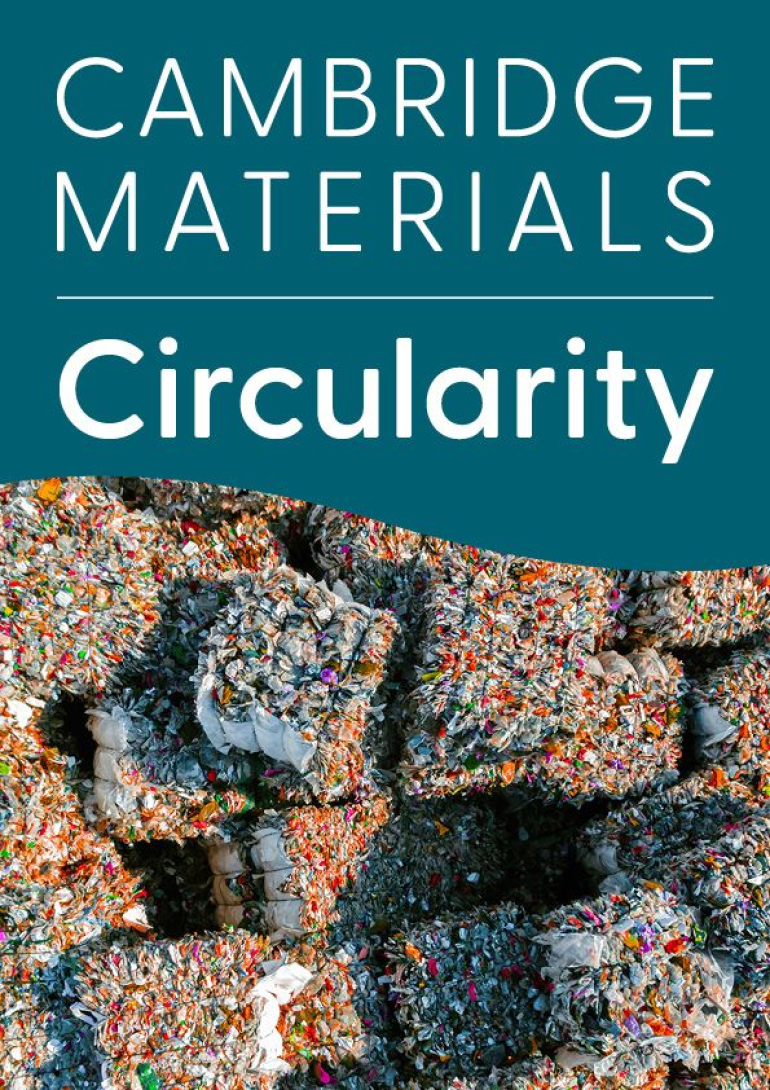
UNSW SMaRT Centre Director, Professor Veena Sahajwalla is the Editor in Chief of the new Cambridge University Press journal, Cambridge Materials Circularity.
Circularity is one of four new Cambridge Materials journals recently launched as open access journals to accelerate progress on UN Sustainable Development Goals by connecting materials science with policy, innovation, and societal impact.
Veena has been appointed Editor in Chief of Circularity in recognition of her globally recognised work in materials science and engineering, focussed on developing innovative waste and recycling technologies to deliver greater sustainability and create circular economies.
In an announcement, CUP's Caroline Black, STM Journals Publishing Director said: "Materials research is the backbone of modern innovation, impacting almost every aspect of our daily lives. By understanding the structure of matter, from atomic scale to millimetre scale and beyond, materials scientists invent new ways to combine chemical elements into materials with unprecedented functional properties.
"Therefore, the research is central to sustainability efforts and, due to its interdisciplinary nature, is crucial for addressing global challenges, including energy and environmental issues, healthcare and infrastructure.
"With this in mind, Cambridge is launching a new open access series, Cambridge Materials, dedicated to addressing some of the world’s most pressing sustainability challenges. The journals will connect scientific discovery with societal priorities, linking technology, policy, and implementation to tackle global challenges."
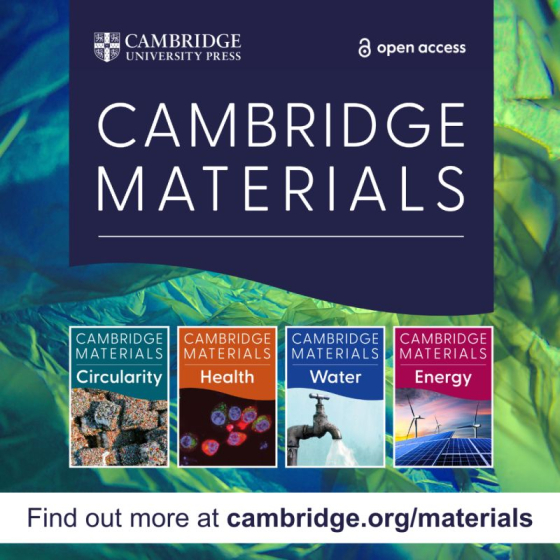
Cambridge Materials Circularity website
Advancing research at the intersection of materials science, sustainability, and circular economy principles.
Cambridge Materials: Circularity will not only foster scientific innovation but also translate research into real-world strategies for reducing waste, conserving resources, using waste as a resource for remanufacturing and mitigating climate impacts.
"I am looking forward to shaping and bringing to life the Journal’s vision—building a vibrant, inclusive community of researchers who are passionate about making materials more sustainable. The opportunity to highlight transformative ideas and nurture emerging voices in the
field is especially exciting."
Professor Veena Sahajwalla
UNSW Sydney, Australia
Editor-in- Chief Cambridge Materials: Circularity
To celebrate the launch of the Cambridge Materials journals, CUP published this Q&A with Veena to discuss the aims of the journals and her hopes for her role as EiC:
Q: Why will the journals be important, and what role will they play in science and society?
Veena Sahajwalla: Cambridge Materials: Circularity will serve as a vital platform for advancing research at the intersection of materials science, sustainability, and circular economy principles. It will not only foster scientific innovation but also help with the translation of research into real-world strategies for reducing waste, conserving resources, using waste as a resource for remanufacturing and mitigating climate impacts. By connecting scientists, industry, and policymakers, the Journal will play a key role in addressing global sustainability challenges.
Q. What are your hopes for the type of content the journals will attract?
VS: I hope the Journal attracts high-quality, interdisciplinary research that combines materials science with systems thinking, design, policy, and lifecycle analysis. Papers exploring circular design, recycling technologies, bio-based materials, and resource recovery will be particularly valuable. Above all, I would like for [CM: Circularity] to showcase rigorous, solution-oriented research with global relevance to truly create circularity of our material resources.
Q. What are you most looking forward to in your role?
VS: I am most looking forward to shaping and bringing to life the Journal’s vision—building a vibrant, inclusive community of researchers who are passionate about making materials more sustainable. The opportunity to highlight transformative ideas and nurture emerging voices in the field is especially exciting.
Q. What difference could these journals make to existing literature?
VS: This Journal will fill a crucial gap by integrating materials science with circular economy thinking, moving beyond technical performance to consider long-term environmental, economic and societal impacts. It will complement existing publications by emphasising applied, scalable, and interdisciplinary solutions that directly inform sustainable practice and policy, as we do at my own Sustainable Materials search and Technology (SMaRT) Centre at the University of NSW, Sydney.

Cambridge Materials: Circularity is an interdisciplinary journal combining materials science, social science, environmentally sustainable technologies, and policy studies, highlighting research on responsible production and re-manufacturing, climate resilience, and waste and recycling innovation.
The journal aligns with multiple United Nations Sustainable Development Goals (SDGs), including:
SDG 9: Industry, Innovation, and Infrastructure
SDG 12: Responsible Consumption and Production
SDG 13: Climate Action
SDG 17: Partnerships for the Goals
Cambridge Materials: Circularity is part of Cambridge Materials, a suite of four journals, each focused on a particular global challenge – circularity, energy, health, water – and aligned with the UN Sustainable Development Goals (SDGs).
The Cambridge Materials journals publish high-quality research that integrates innovations in materials science and engineering with environmental, life cycle, economic, social, and policy considerations, thereby bridging knowledge gaps and supporting impactful solutions.