
Latest news
Read the latest news from the Centre for Sustainable Materials Research and Technology


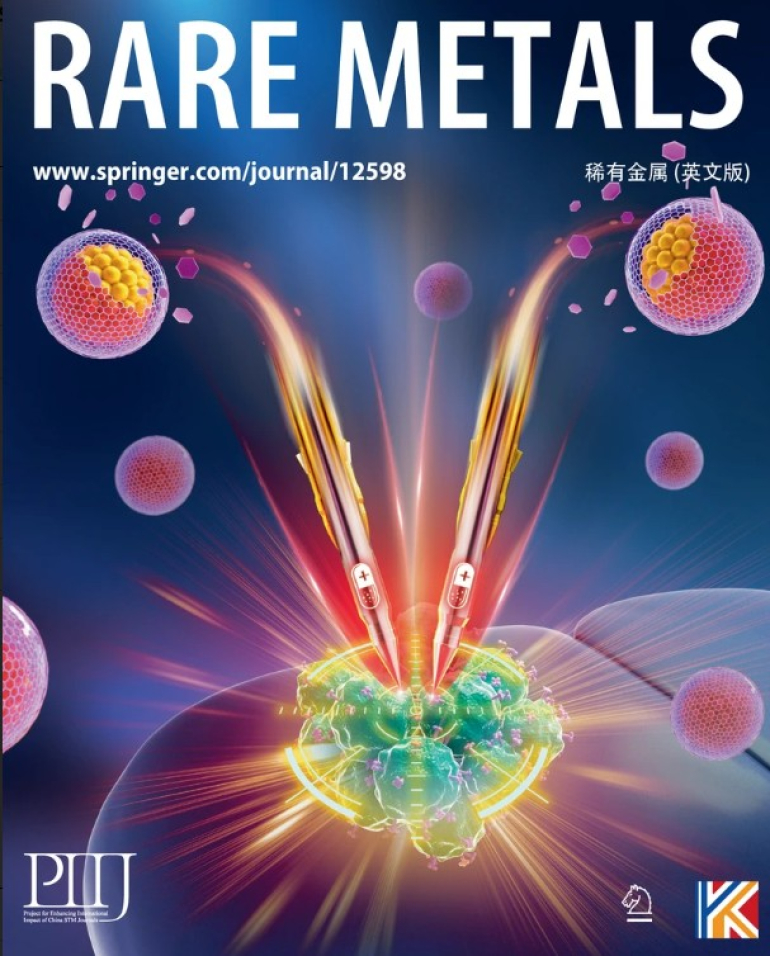
A UNSW SMaRT Centre research study has found how to more effectively separate valuable rare earth metals from recycled batteries, making recycling cleaner, cheaper, and more practical for real-world use.
Published in Springer Nature's Rare Earths Journal, the research explored how to separate valuable rare earth metals (like lanthanum, cerium, neodymium, praseodymium, and samarium) from old batteries using a chemical process called solvent extraction.
These metals are usually mixed together, and separating them is hard but very important because each one is used in different high‑tech products (like electronics, magnets, and clean energy technology and infrastructure).
They tested different chemical mixtures to see which ones work best at separating the metals and found that:
The acidity level (pH) of the solution has a strong effect on how well separation works.
Adding a helper chemical (TBP) makes the separation more selective and effective.
A specific combination of chemicals (like Cyanex 572 + PC 88A + TBP) gave the best overall performance.
In short, they figured out which chemical setups work best and under what conditions.
This matters because it helps:
The research was done as part of SMaRT's ARC Microrecycling Hub, and builds on a large body of work to develop technologies to recover valuable materials from wastes, including Green Metals from e-waste, batteries, solar PV waste and other complex waste sources.
Excerpt:
The demand for critical minerals required for clean energy is projected to increase significantly, potentially reaching up to 3.5 times its current level by 2030, among which rare-earth elements (REEs) have received increasing traction [1]. REEs have become indispensable for driving advancements across diverse technological frontiers. Their unique properties make their role vital in electronics, clean energy, lighting, defense, and healthcare industries [2].
The leading end uses of REEs are in magnets, catalysts, polishing materials, ceramics and glass, batteries, phosphors, and metallurgical applications, which indicate the importance of REEs in strategic industries [3]. According to the U.S. Geological Survey, the estimated global mine production of REE in 2023 increased by 16.7% to 350 kt of REE oxide (REO) equivalent, compared to the 2022 value of 300 kt [4].
The most recent data on the global recycling rate of REEs indicate that despite the criticality of these elements and the intensive environmental impact associated with their mining, only less than 2% of REEs are currently recycled, which is dramatically low compared to the recycling rate of iron and steel (90%) [5, 6].
This highlights the importance of developing efficient recycling technologies to unlock REEs from end-of-life products and reduce the reliance on primary mining [7]. According to the latest data available, the market size of REEs recycling in 2022 was US$ 286.9 M, which is predicted to reach US$ 649.1 M in 2031, with pyrometallurgical technology segment dominating the market [8].
While the extraction and recovery of REEs stand as the primary economic challenge in their production, the individual separation of these elements to yield pure products constitutes a significant scientific bottleneck in their production cycle.
This is due to the frequent coexistence of REEs in both primary and secondary resources, presenting a formidable challenge for separation owing to their remarkably similar chemical properties and closely matched ionic radii. For catalysts and ceramics, the application of individual REEs is often deemed unnecessary, potentially owing to the relatively lower sensitivity of these applications to raw material purity, or in some cases, due to the benefits derived from the combined properties of multiple REEs. However, high-tech applications and the demand for new materials necessitate REE raw materials of high purity.
This implies that mixed REE concentrates must undergo separation processes to obtain pure individual REE compounds before they can be utilized in such applications [9]. Nevertheless, achieving high-purity individual products from mixed REE concentrates through simple fractional crystallization or precipitation presents significant challenges [10, 11].
The authors conducted a thorough analysis and discussion of various hydrometallurgical techniques for the separation of REEs in their recent review paper [2]. Among these separation methods, solvent extraction is widely recognized and extensively used as the most effective, efficient, and economically viable method for separating adjacent REEs into highly pure individual element products [12, 13]. The process relies on the selective partitioning of metal ions from an aqueous solution into an immiscible phase containing extractant molecules and a solvent (typically organic substances).
Metal ions form hydrophobic complexes with the extractant, and subsequently transfer from the aqueous phase to the non-aqueous phase [14]. Solvent extraction is widely recognized as a suitable commercial technology for separating REEs due to its capability to handle large volumes of diluted pregnant solutions effectively [15]. Studies have shown that solvent extraction can effectively turn Acid Mine Drainage into a commercially viable feedstock for rare-earth production [16].
Furthermore, the development of innovative approaches and sequential step-leaching processes has advanced the field of REE extraction, making solvent extraction a key component in the recovery and separation of REEs from complex aqueous feedstock solutions [17, 18].