
Latest news
Read the latest news from the Centre for Sustainable Materials Research and Technology


UNSW SMaRT Centre researchers are continuing their work on sharing their growing understanding of microplastic wastes as part of the Sustainable Communities and Waste Hub that the UNSW SMaRT Centre leads.
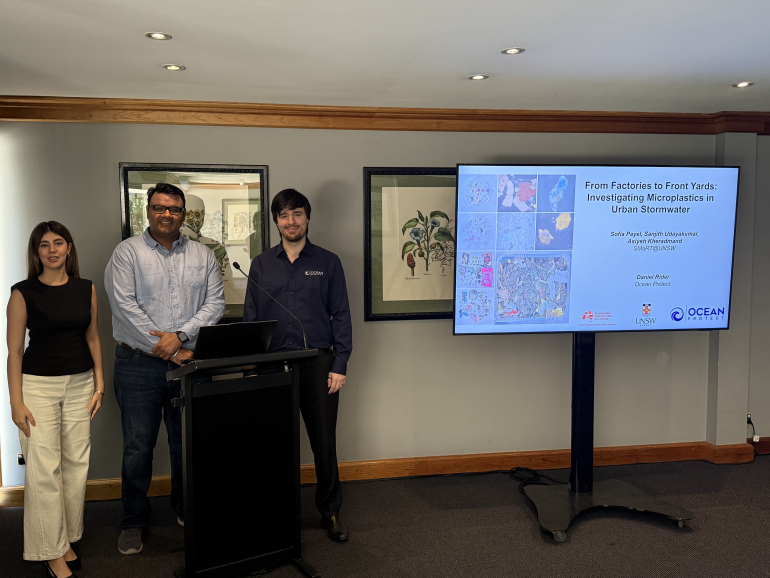
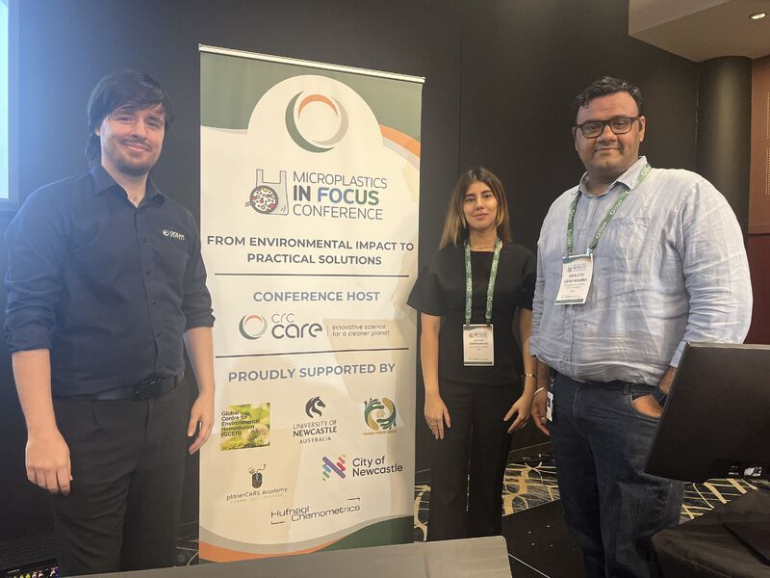
In their latest work, SMaRT researchers from the Hub’s Understanding Microplastics project and collaborators from Ocean Protect recently presented their work at the franc.2025 conference as well as the Microplastics in Focus Conference in Newcastle, for which they won the Best Presenter Award.
The conferences explored how microplastics move through soil, water and air, and the implications for environmental and human health. Discussions highlighted new detection technologies, ecological impacts, and the importance of coordinated science–policy–industry action to build a more circular, plastic-resilient future.
Speakers also emphasised the urgency of understanding microplastic sources and pathways, with particular focus on tyres, textiles and packaging, which are key contributors to pollution in urban environments.
A highlight for the joint presentations with Ocean Protect’s Daniel Rider, “From Factories to Front Yards: Investigating Microplastics in Urban Stormwater.”
The presentation showcased early findings from a twelve-month study examining how microplastics travel through stormwater systems using OceanGuard devices installed in drains across multiple sites.
Over the course of the project, the team:
The team’s real-time analysis approach drew strong interest from researchers and industry participants, underscoring the need for robust data to support sustainable stormwater planning and pollution prevention.
In recognition of their clear communication and collaborative research, Dr Sanjith Udayakumar and Daniel Rider received the conference’s Best Presenter Award.
SMaRT's Dr Farshid Pahlevani, Sofia Payel and Asiyeh Kheradmand’s research efforts were integral in the creation of the presentation.
This follows a recent scientific paper by UNSW SMaRT Centre researchers that was published revealing the impacts of microplastics generated from polypropylene (PP) bottles commonly used for infants and re-usable drinking.
The study - just published in the prestige Elsevier journal Environmental Nanotechnology, Monitoring & Management - investigated microplastic effects of PP, widely used for food and beverage storage.
PP has a propensity to release microplastics (MPs) and nanoplastics (NPs) under routine use conditions, and the SMaRT team investigated impacts of PP infant feeding bottles and water bottles under controlled thermal and mechanical stresses.
Supported with funding from the Australian Government under the National Environmental Science Program's Sustainable Communities and Waste Hub, headed by SMaRT and Prof Veena, the study found:
This report builds other recent microplastics research by SMaRT on behalf of the SCaW Hu,:
Microplastics in coastal and marine environments research
Study reveals extent of microplastics pollution in Australia