
Latest news
Read the latest news from the Centre for Sustainable Materials Research and Technology


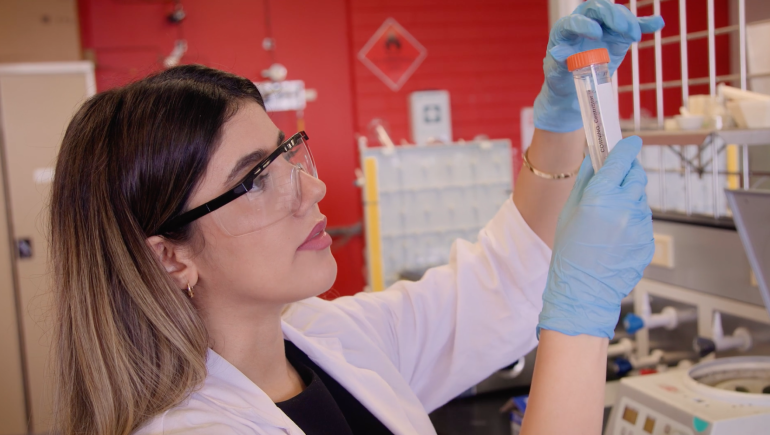
New research from UNSW SMaRT Centre scientists shows that filtration systems installed in stormwater drains can capture substantial quantities of microplastics before they enter waterways, and that commercial areas should be the priority for installation.
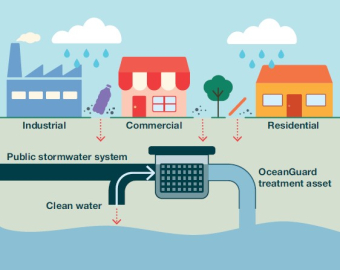
The research, via SMaRT's work within the Sustainable Communities and Waste Hub, involved sampling at various stormwater treatment devices called OceanGuards, in collaboration with Ocean Protect as part of the Hub’s Understanding Microplastics project.
The sampling was done at industrial, commercial and residential sites, focusing on plastics ranging from visible macroplastics (>5 mm) to fine microplastics (<500 µm). The sites included loading docks, carparks, hardstands, gardens, and a variety of roads, like truck stops, near entry points, slow roads and strata roads, ensuring consistent, real-world capture of pollutants under operational conditions.
Daniel Rider, water sensitive urban design specialist at Ocean Protect, says studies have found that about 80 per cent of ocean plastic pollution reaches the ocean via stormwater from urban areas, and in Australia, there’s very little treatment or even filtration of this water and the waste it carries.
“Unlike sewage which goes through treatment plants, there is no treatment plants for stormwater,” he says.
Key Findings
1. A clear pollution gradient across land uses
Commercial catchments had the highest plastic and microplastic loads due to intensive human activity, vehicle movement, and packaging waste. Industrial sites contributed large macroplastics that fragment into microplastics, while residential areas contained less total plastic but a greater share of fine, mobile, and persistent microplastics.
2. Size matters: fragmentation is already happening
Across all catchments, 1–5 mm particles dominated, indicating advanced fragmentation, fine particles (<500 µm) were common in residential roads and industrial hardstands, and larger plastics (>5 mm) were concentrated in industrial and commercial areas.
3. Common urban polymers dominate
These polymers are widely used in packaging, textiles, and consumer products, confirming that everyday plastic use directly translates into possible stormwater pollution.
4. Stormwater treatment assets are a critical defence
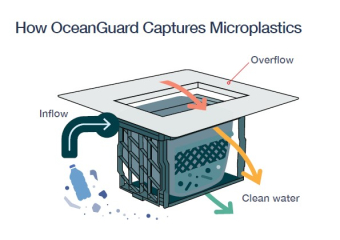
OceanGuard systems captured substantial amounts of fine microplastics (>200 µm), medium fragments (500–1000 µm), and larger debris that would otherwise enter downstream waterways, making source capture far more effective and cost‑efficient than downstream clean-up.
In 2025, researchers from SMaRT partnered with environmental engineering firm Ocean Protect to sample stormwater from industrial sites, commercial carparks and residential streets across Sydney.
They analysed plastics captured by the firm’s OceanGuard filtration systems before they entered the public drainage network.
The team, led by Professor Veena Sahajwalla and Dr Sanjith Udayakumar, with doctoral researchers Sofia Payel and Asiyeh Kheradmand, investigated the composition of the different microplastics found, and the quantities from each site type.
“Stormwater drains carry more than just water,” Dr Udayakumar says. “Hidden within this runoff are residues, leaves, sediments, a lot of plastics, and other pollutants that enter our main waterways.”
Explainer videos:
Policy implications
Microplastics are widespread in urban stormwater. The type of site tends to shape the way microplastics are generated and how they are transported. Fine microplastics are highly mobile, persistent and bioavailable, making them particularly concerning for aquatic ecosystems.
The findings support stronger stormwater regulation, improved placement and maintenance of treatment assets, and inclusion of microplastics in urban water quality frameworks.
Improving stormwater filtration infrastructure could make a huge difference to the amount of plastics ending up in our ocean, but the shift to better systems will be costly and time-consuming.
This research highlights the sites that can be prioritised to have the most impact.
Commercial developments need particular scrutiny given their role as the largest accumulation hotspots.
Preventing pollution at the source means “reducing plastic bags, plastic bottles, straws impacting our marine life and looking at a lot of better ecosystems and habitats and liveability for citizens across Australia,” says Rider.
