Latest news
Read the latest news from the Centre for Sustainable Materials Research and Technology


A book chapter by Hub Leader Prof Veena and researcher Dr Rumana Hossain has been published examining the growing problem of plastic pollution in oceans, rivers, lakes, and other aquatic environments.
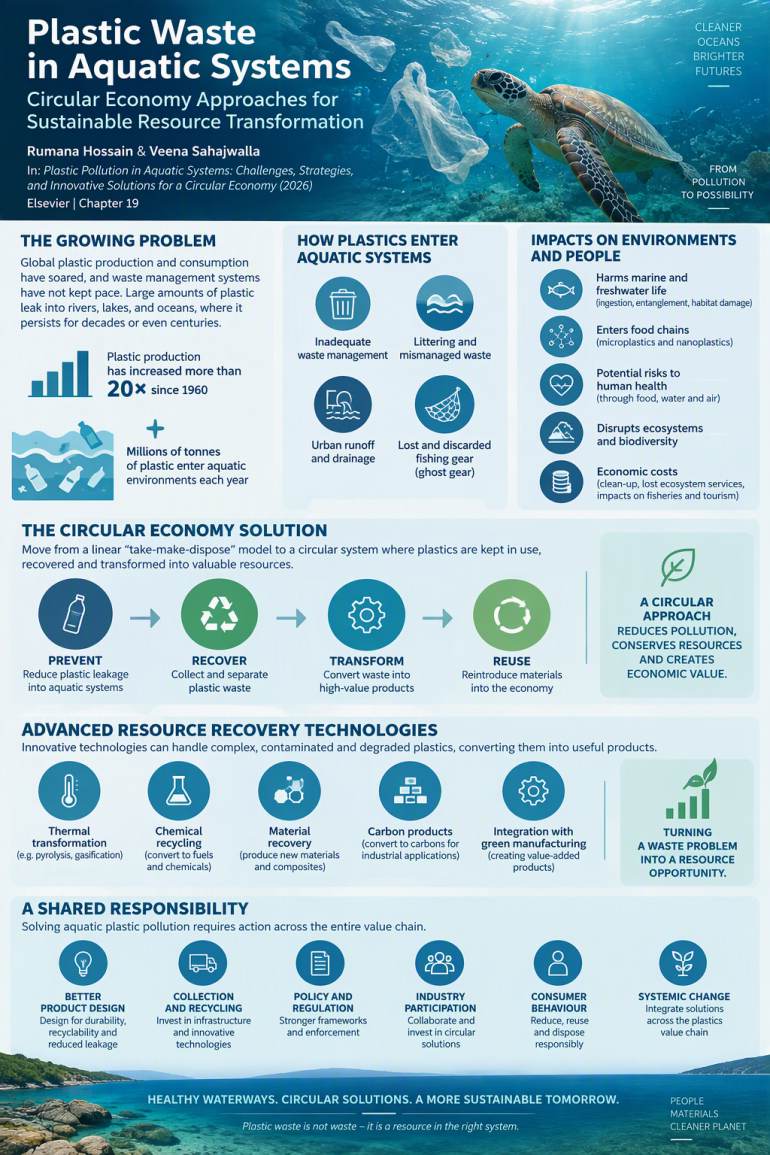
The chapter, “Plastic Waste in Aquatic Systems: Circular Economy Approaches for Sustainable Resource Transformation,” also explores how circular economy principles can help transform this waste from an environmental liability into a valuable resource.
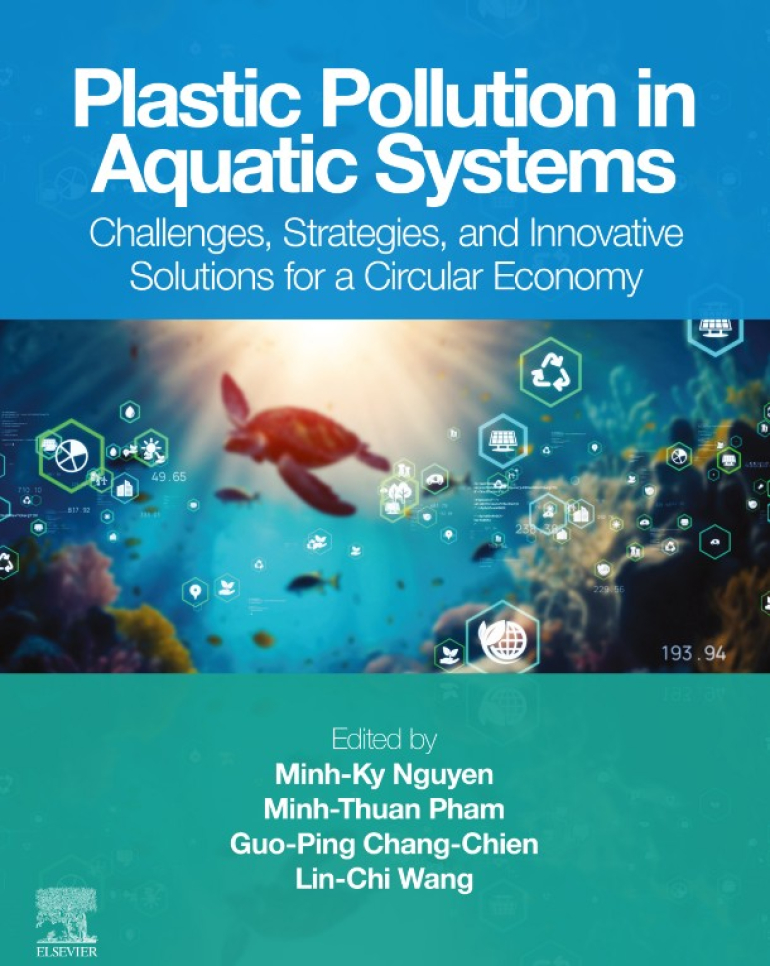
In the book - Plastic Pollution in Aquatic Systems: Challenges, Strategies, and Innovative Solutions for a Circular Economy, published by Elsevier's ScienceDirect - Veena and Rumana explain that plastic production and consumption have increased dramatically over recent decades, while waste management systems have struggled to keep pace.
As a result, large quantities of plastic waste enter aquatic ecosystems, where they can persist for decades or even centuries. Over time, larger plastic items fragment into microplastics and nanoplastics, creating widespread environmental contamination that affects marine life, freshwater ecosystems, food chains, and potentially human health.
A central theme of the chapter is that traditional approaches focused solely on waste disposal are insufficient. Instead, the authors advocate for a circular economy framework in which plastics are viewed as resources that can be recovered, transformed, and reintroduced into manufacturing systems.
This approach aims to reduce dependence on virgin fossil-based materials while minimizing environmental leakage and waste accumulation.
The chapter discusses the limitations of conventional recycling methods, particularly when dealing with mixed, contaminated, or degraded plastic waste recovered from aquatic environments.
Many of these materials are difficult to recycle into equivalent products because of contamination, polymer degradation, and complexity of waste streams. To address these challenges, the authors highlight emerging technologies capable of converting problematic plastic waste into higher-value products rather than low-value recycled materials.
Particular attention is given to advanced resource recovery and thermal transformation technologies that can convert difficult-to-recycle plastics into new materials, chemicals, carbon products, fuels, or manufacturing feedstocks. These approaches align with the broader concept of “resource transformation,” where waste is not simply managed but actively transformed into value-added products that support sustainable manufacturing and industrial circularity.
The authors also emphasise the importance of preventing plastic leakage into aquatic systems in the first place. Effective solutions require a combination of improved product design, collection systems, recycling infrastructure, industry participation, government policy, consumer behaviour change, and technological innovation. They argue that no single intervention is sufficient and that systemic change across the entire plastics value chain is necessary.
A key conclusion of the chapter is that plastic pollution should be viewed not only as an environmental problem but also as a lost economic opportunity. By adopting circular economy strategies and investing in technologies that recover value from waste plastics, societies can simultaneously reduce pollution, conserve resources, lower demand for virgin materials, and create new economic opportunities through sustainable manufacturing.
In simple terms, the chapter argues that plastic waste in waterways and oceans should not be treated merely as rubbish to be removed. Instead, it should be seen as a resource that can be transformed into valuable new products through innovative recycling and manufacturing technologies, helping to protect aquatic ecosystems while supporting a more circular and sustainable economy.
The book chapter was done as part of the Hub's Understanding Microplastics research stream under the Impact Priority 2 Plastic and Waste Materials Program, supported with funding from the Australian Government under the National Environmental Science Program.