Latest news
Read the latest news from the Centre for Sustainable Materials Research and Technology


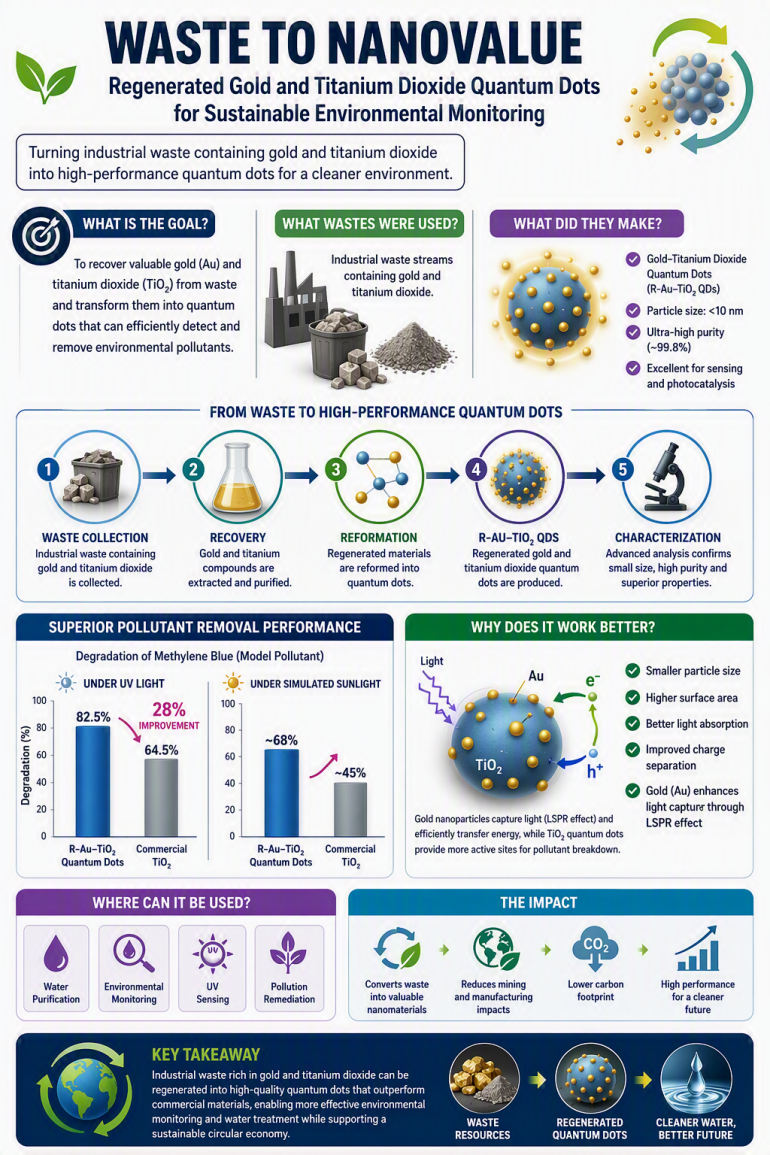
A UNSW SMaRT Centre research study recovered gold and titanium dioxide from industrial waste and transformed them into feedstock ready for remanufacturing into a variety of uses.
SMaRT demonstrated that valuable materials hidden in industrial waste can be reformed into high-performance nanomaterials instead of being discarded.
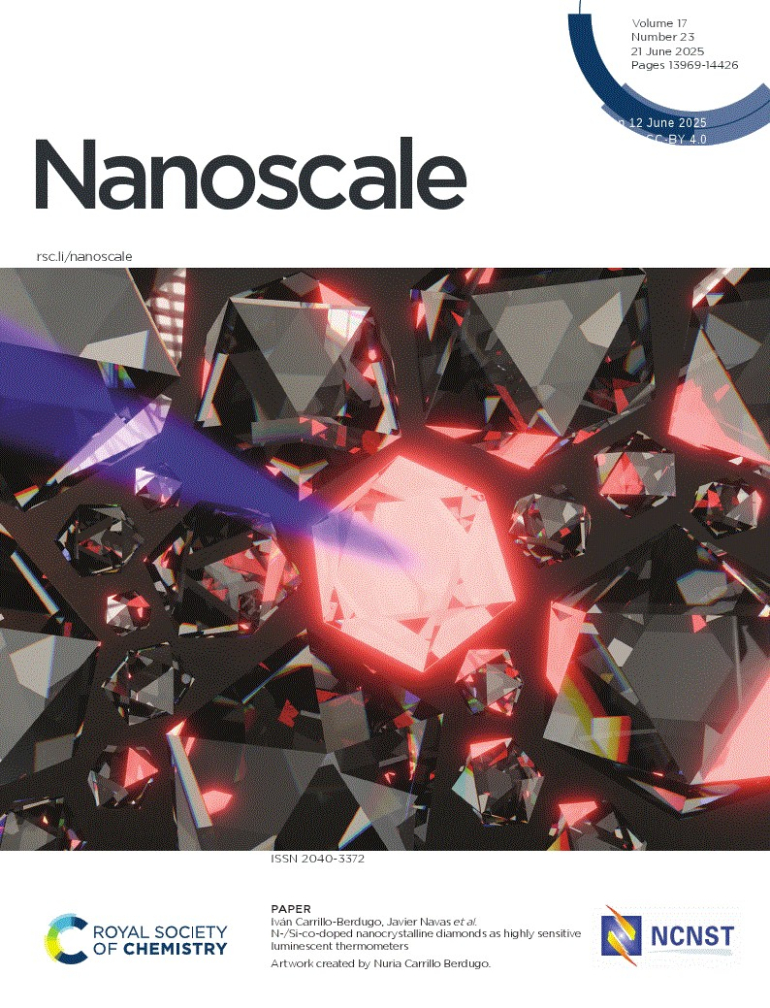
The study, published in Royal Society of Chemistry's Nanoscale Journal, recovered gold (Au) and titanium dioxide (TiO₂) and converted them into tiny nanoparticles called quantum dots.
They found these waste-derived quantum dot materials actually performed better than commercially manufactured materials used for environmental monitoring and pollution treatment.
The reformed waste gold and titanium dioxide were effectively used for photocatalytic applications, as high-performance quantum dots that cleaned pollutants more effectively than commercial materials, demonstrating a circular-economy approach to environmental monitoring and water treatment.
The study builds on SMaRT's large body of research and technology development over many years, as the urgency continues for a sustainable supply of raw materials in advanced technologies, by using regenerated and reformed waste materials.
They specifically tested how well the waste-derived materials could break down a common water pollutant called methylene blue. The findings are important because these materials that efficiently break down pollutants can be used in:
The waste-derived materials actually outperformed commercial titanium dioxide.
Under UV light
This represented a 28% improvement in pollutant removal performance.
Under simulated sunlight
The waste-derived material achieved approximately 68% pollutant degradation, again outperforming commercial TiO₂.
The researchers found several advantages: